Monday, December 19, 2011

Advertising makes it happen. Now, who's got the 'nads to write the check?

I had occasion to revisit the nexus of my two previous lives -- motorcycles and advertising -- the other day, when I found myself writing about the nadir of motorcyclists' image in U.S. pop culture, in the early 'sixties.

Motorcycles were bad news after the breathless coverage of the Hollister ‘motorcycle riot’ in 1947. Those greatly exaggerated tales inspired The Wild One in 1954. Then, Hunter S. Thompson published ‘Hells Angels: The strange and terrible saga of outlaw motorcycle gangs’. It’s likely that Thompson’s account of life with the Hells Angels was almost as apocryphal as press accounts of Hollister had been, but by the mid-‘60s, the image of motorcycling in the U.S. could hardly have sunk any lower.

The American Motorcyclist Association wrung its hands and plaintively painted the outlaw crowd as ‘one percenters’, claiming that 99% of riders were regular folks, but the media sure weren’t buying it -- probably because that story didn’t sell newspapers.

It wasn’t the AMA that set motorcycles back on the road to respectability, it was Honda. Hollywood and the media had knocked motorcycles down, and Honda’s ad agency, Grey Advertising, knew that Hollywood had a role to play in redeeming them, too. Grey conceived the “You meet the nicest people on a Honda” ad campaign and pitched an audacious media plan to Kihicharo Kawashima, the head of American Honda.

Grey proposed running a pair of television commercials during the 1964 Academy Awards telecast. That would put two 90-second ‘nicest people’ ads in front of more than two-thirds of the U.S. television audience. Buying the two spots cost $300,000, which was enough to give Kawashima pause; it was the equivalent of the gross revenues -- not the profit mind you, the gross revenues -- on the sale of about 1,200 Honda 50s.


This is not the original, 90-second, 'You meet the nicest people on a Honda' ad. The original is not available on YouTube and in the spirit of full disclosure I should admit that while I've seen the campaign's print executions, I've never watched the original commercial. (Please, please, American Honda, scour your archives, digitize a copy, and post it!) 

The truth is, most people in the ad business felt that Grey Advertising was well-named. The agency had a reputation for safe, middle-of-the-road creative. That said, the strategic thinking behind the 'nicest people' campaign was worthy of Don Draper (and in one Mad Men episode, the fictional Sterling Cooper agency actually pitches the non-fictional Honda company business!) Overall, the real campaign played to Grey Advertising's strengths and Grey's tendency towards insipid creative was OK; the campaign was, after all, aimed at the middle of the bell curve. 

About a decade later, Grey was still at it. This ad, featuring a young John Travolta, acknowledges the first -- 1973 -- Arab oil embargo/price shock and the ensuing recession; the short-arsed motorcycle cop is probably a tip of the (half) helmet to Robert Blake in 'Electra Glide in Blue.'

Kawashima needn’t have worried. That ad campaign didn’t just plant Honda in the minds of millions of hitherto non-riding consumers, it helped convince the country’s media that it was not in their commercial interest to alienate the entire motorcycle industry. Life Magazine ran a famous photo of a drunken biker at Hollister in 1947 (the ethically questionable shot was set up days after the actual ‘riot’.) When Honda started buying full page ads in the ‘60s, Life’s editors stopped running negative motorcycle stories.

That $300,000 advertising investment really gave me pause, too. That was the equivalent of about $2,000,000 in 2011 dollars. I don't know, offhand, what American Honda's best-selling (current) motorcycle is, but if the company spent 1,200 x that model's revenues on a single night's advertising, it would amount to a lot more than two million bucks.

American Honda won't spend that much this year. Hell will freeze over before we'll see a breakout motorcycle ad in this year's Academy Awards or Superbowl. I get occasional press releases from manufacturers claiming year-over-year sales growth, and it's possible we've seen the worst of the post-2008 meltdown/housing bubble. But don't kid yourself; the motorcycle business is in the fucking toilet. Why is it that there's no chance American Honda will show that kind of leadership today?

Mister, we could use a man like Kawashima today.

I stole this pic from Honda's 'history' site. It's captioned as follows: Holding up the You Meet the Nicest People on a Honda. poster are Kihachiro Kawashima (then general manager of American Honda), left, and Takeo Fujisawa (then senior managing director of Honda Motor), second from right. I'm guessing the tall guy is from Grey Advertising.

For a slightly different take on Honda's rise in the U.S. (and a look at one of the 'nicest people' print executions) you can read this blog post by FrogDesign's Adam Richardson.


Monday, December 5, 2011

The Blind Man - an excerpt from Riding Man

There’s a natural evolution in motorcycle racing. Almost all racers have families and friends who race. Most amateur racers are their own mechanics; they start early, by borrowing their dads’ tools. Whether they should be mechanics is debatable (I suspect that my inability with tools may have improved my results; at least I never hurt my bikes’ performance.)

Over time, the typical clique of racing friends shrinks, as guys get tired of being injured or broke or backmarkers or some permutation of those three. Those left gradually coalesce into two groups: riders and mechanics. Sometimes, the mechanics are the handful of guys who are honest with themselves and ready to admit they don’t have the speed to get to the next level. Sometimes they run out of money to race, but can’t give up the scene. More rarely, they have a gift for it. The French have a great expression for this: they call it having “les doigts de fee,” which literally means “a fairy’s fingers”. The first mechanic I ever knew went a long way towards making me believe that a mechanic’s skill with tools was almost a magic power.

When I was a kid, my dad worked for a big international company. The company moved our family from Canada to Switzerland, so he could run their Geneva office. Our home was in Tannay, an agricultural village that looked down over orchards and vineyards to a big lake. Under Swiss law, at 14 I was allowed to ride a 50cc moped. In surrounding countries, mopeds had three-speed transmissions, but in Switzerland, models sold to teenagers had the top gear removed from the box. Thus, in theory, they were limited to 30 kilometers an hour. Trust the Swiss to take the fun out of everything.

I counted the days down to my fourteenth birthday anyway. My parents bought me the Cadillac of mopeds: a Puch Condor. To start it, I pedaled it like a bicycle. The pedals came in handy for assisting the motor on steep hills, or when we were racing out of slow turns (though digging the inside pedal into the pavement at maximum lean was definitely to be avoided!)

All the kids I knew had similarly restricted bikes, and we endlessly attempted to eke out a little more power. Since every single time any other kid went faster was a serious personal insult, our own neighborhood ‘arms race’ made the U.S.-Soviet debacle seem like an episode of Chip and Dale.

One night, mulling over the possibilities of increased compression, we decided to skim our cylinder heads. Unencumbered by knowledge of milling machines, we cast about for a suitable tool. We found it in a neighbor’s basement: a belt sander. Not one of us waited to see if it worked for anyone else first. We’d have got better results skimming our own stupid heads. Over the next few nights, quite a few local mopeds (which were often left parked outside front gates, in the convenient shadows of stone walls and overgrown hedges) lost their heads.

At every gas station; there was always a special premix pump for motorbikes only. We’d decide how much fuel we were going to buy, which was never much. We told the attendant how much fuel – and what percentage of premix oil – we wanted.

Knobs were set, and a handle was pulled down, sort of like the handle on an expresso machine. The customer was reassured to see a little spurt of oil sprayed onto the inner wall of the glass ‘fishbowl’ on top of the pump. Then a second handle released the gasoline, which swirled in after the oil, dissolving it. It was a special mixture – different than buying gas for a car – that may as well have been a magic potion. All of us idiots concluded that by reducing the percentage of oil to 2% from the recommended 3%, we could get 1% more gasoline, with a concomitant increase in horsepower.

Of course, nothing we did had any impact on performance at all, except to occasionally make it much worse. The top speed of every bike was pretty much determined by the luck of the draw, though since I was the smallest rider, I could pull taller gearing

While the bikes were simple and generally pretty rugged, we were awfully hard on them. We rode without helmets, so it’s amazing we didn’t find ways to kill ourselves, even at sorely restricted speeds. Low-siding on cow shit was a common excuse; once, I took to the ditch at full speed when a tractor and trailer laden with 200 bushels of apples emerged from a hedgerow in front of me. Damage from such wipeouts had to be repaired at the local shop. If my bike would still roll, it was an easy push; just up the street from my house.

The mechanic’s shop was basically a two-bay garage, which along with a tiny beauty salon, made up the ground floor of a two-story house. He worked on bicycles and mopeds, while his wife was the beautician. In general, his customers were not spoiled foreign children, they were real Swiss; farmers, cops, shopkeepers and like, who relied on motorbikes for day-to-day transportation. The wives and girlfriends of those guys were the customers for the mechanic’s wife. All of them were xenophobes, and their treatment of foreigners usually ranged from outright scorn to something resembling the Amish concept of ‘shunning’, unless money was changing hands.

If I was pushing in the bike, or walking in to pick it up, I’d always make a little noise, sort of like throat clearing, to warn him of my arrival. He was an intimidating character for a 14-year-old to deal with. He was old. 60 or 70. Tall and gaunt. Shaking his hand was like grabbing a bunch of walnuts. When he talked to me, he’d walk up to the sound of my voice, but stare straight out over my head. That was because cataracts had, long since rendered him completely blind. Hiscorneas were as opaque as a boiled trout’s.

He did everything by feel. Routine maintenance, stuff like fitting a new inner tube and tire, was absolutely no problem; sighted mechanics could do that with their eyes closed too, maybe. But he rebuilt top ends, replaced brake shoes; stuff that utterly baffled me. A few hours a week, he had a sighted assistant that came in, but usually he was alone. When I went there, there was always some little thing he’d borrow my eyes for, like having me read the tiny numbers on a carb jet.

Occasionally, I’d stop by his shop just to fill up my tires. (The Condor actually came with a bicycle pump for the purpose, but you had to pump like a madman to overcome leakage in the pump itself. He had a pump powered by a foot treadle that allowed me to run the rock-hard tires I preferred for minimal rolling resistance.) When I asked if I could borrow his pump, he always sternly warned me to replace it exactly – exactly – where I’d found it.

Luckily for him, the bikes he worked on were simple. They were all piston-port two-strokes, whose basic design hadn’t changed since the introduction of the NSU ‘Quickly’ in about 1947. When my bike arrived at his shop for the first time, though, he was fascinated. Until then, most Swiss-market mopeds were sold with rigid front forks, like a bicycle. Mine had an inch or two of suspension travel, thanks to a bogus leading-link arrangement in which a little block of rubber served as both spring and damper. He spent a long time ‘looking’ at it, stroking and probing the workings with his fingers, memorizing the arrangement of the parts. It was not long before he got the chance to repair those forks.

He had a name of course, but we just called him ‘the blind man’. By the time I was old enough to get a moped, my family had lived in Switzerland for several years, and I spoke fluent French. Other foreign families came and went every year or two, so I occasionally introduced new customers to the blind man, and acted as a translator. Since his ability was so extraordinary, I sort of ‘showed him off’, I guess. He always took the work. He and his wife were making their living about five bucks at a time, so there was no turning away paying jobs.

After Switzerland, my family moved back to Canada, to Calgary. Out west. Cowboy country. It seemed good, for me, because I could have a bigger bike. I ended up getting a finicky, disc-valve Kawasaki. While it ran, it was just fast enough to illustrate the fact that despite my intense desire, I was incapable of intuiting just how people rode motorcycles really quickly. My inability to keep it going was one of the reasons I ended up giving up motorcycles for a long time.


Thursday, December 1, 2011

Intolerance is un-American

A few weeks ago, the manager of the grocery store where I work (on my day job, obviously. I don't practice motorcycle journalism in grocery stores -- that's what Starbucks is for) took me aside. He told me that someone in North Carolina had written an email to the store, complaining about the contents of some of my blog posts. Why would that particular fucktard write my employer and not me? Well, obviously, to harass me by encouraging my employer to fire me, or at least lean on me to silence me.

I didn't see the letter, so I have no way of knowing whether it was my liberal political bias that infuriated the writer, or whether it was the generally atheist and foul-mouthed nature of some of my 'rantier' columns that triggered this cowardly and un-American personal attack.

The manager of the store where I work seemed a little unsettled by even having to raise the subject. I got the feeling that this was something that had been discussed at the head office, and that maybe corporate counsel had weighed in. If that was the case, they'd certainly realize that there's nothing in this blog that could possibly be interpreted as hate speech, or seditious. Although Missouri (the state in which I reside and work) is a so-called right-to-work state (it would more accurately be called a employer's-right-to-fire state) and the company could legally have fired me on the spot, I imagine that the company realizes that firing an employee for exercising his right to free speech is not going to generate a wave of positive press.

I should point out that I've written some highly-politicized posts, and I've written posts in which I named my employer, but that my employer was never cited in any of those volatile posts. Nothing I've written about my employer could be interpreted as particularly negative.

So the fucktard in North Carolina had to read some post that infuriated him, and then dig through the blog to find some other post in which I mentioned my employer by name. Then, said fucktard had to figure out how to contact my employer and craft a letter which had the intent, obviously of either silencing me or punishing me for my views by getting me fired.

Nice, eh?

I should say that, thus far, my employer has been careful not to say "Don't write any more of that stuff," or "You're on report,"  or anything like that. In fact, the only thing I was told was, "You're entitled to your opinion."

I volunteered to remove any direct reference to my employer by name, and in fact have gone back through earlier posts and redacted the company's name. That makes it hard to even write about working, but then I had a brainstorm. Obviously, I have a bit of a potty keyboard when I'm writing here on Bikewriter.com; I figure, joke you if you can't take a fuck.

But when I used to make a living writing for other sites and pubs, if I had to insert swearing (for example as part of a direct quote) I used to replace the offending words with symbols drawn from math or other alphabets, the way comic book artists sometimes fill a speech bubble with swirls, exclamation points and daggers to indicate a character is swearing without running afoul of censors.

For example, I'd insert fake words like 'Ƒü©≮' or '$#!+'. People knew that those character strings meant 'insert swear word here' but had no idea they specifically meant 'fuck' or 'shit'.

It occurred to me that I could do the same thing vis-a-vis the name of my employer. If I insert this character string - ₮Ʀ@Ƌ’⋲® √⦰⋲$ - in place of my employer's name, people will know they should insert the name of some grocery store in there, but won't have any idea which specific business I'm referring to. I mean, those characters aren't even part of the regular English alphabet.

Let me make this clear: I love ₮Ʀ@Ƌ’⋲® √⦰⋲$. It's a great company that's built a great business by making grocery shopping fun and providing solid values to customers. Really, it's a shame I have to keep their name a secret now. I have a smile on my face every day that I walk in there. I work my ass off, even when assigned the most thankless tasks in the store, from processing spoiled food to cleaning the toilets. I have huge respect and admiration for the brand they've built, and am constantly fascinated by what I learn from them. I like my co-workers and enjoy my customer encounters. I have every reason to think that most of my customers support my employment and enjoy dealing with me.

That said, the writer in me is sorry that ₮Ʀ@Ƌ’⋲® √⦰⋲$ didn't actually just fire me once they'd mentioned the letter complaining about this blog. I mean, every now and then I write a motorcycle-related post read by several thousand people, but my political rants are typically read only be a few hundred people. Firing me for the content of this blog would be a public relations dream come true for me, and guarantee many thousands of new readers for my non-motorcycle writing. I guess, strategically, if the company was going to fire me, it 'should' have fired me for some other reason and never mentioned the letter, since now that I know about it, it opens up a host of First Amendment issues, to say nothing of a possible suit for libel (or do I mean slander?) against the sender. But I have no reason to think the company will fire me, or even really disagrees with what I've written. Why should they? It's all true.

Who is the North Carolina fucktard anyway? That's the interesting question. I'll definitely take legal steps to get the letter - if ever/as soon as - the fucktard gets the 'satisfaction' of getting me fired. I highly doubt that I'm the only target of this fucktard, and I imagine many similar letters have been sent. I imagine that even if the sender's information was redacted, I could eventually identify the sender by finding matching letters elsewhere on the web.

I doubt, in fact, that the North Carolina fucktard is really an individual fucktard. I'm too good at arithmetic and probability to think that amongst the few dozen readers of my typical political posts - many or most of whom agree with me - there's some individual reader who disagrees so violently that they'd go to that much trouble to silence me. It's possible, I grant you, but not likely.

It's more probable that some group like the Koch brothers have funded a group of kochsuckers who, using tools like Google Alerts, are searching the web for people like me, and then engaging in an organized harassment effort. If you were going to conduct such an effort, North Carolina would be a good place to base it, since it is an American Taliban stronghold.

Either way though, whether that letter was written by a lone nut job, or whether it was part of an organized fatwah, my only real comment is this...

Intolerance is un-American.

Oh, and by the way, Ƒü©≮ you.

Sunday, November 27, 2011

For shame

With the onset of winter (and a certain degree of media fatigue) the Occupy movement has either cooled off, gone into hibernation, or is entering a new phase; pick one, depending on your point of view. But, before winter set in, I watched video footage of what might have been the movement's defining moment.

I write of the pepper-spraying of UC Davis students. The clip below begins with a striking image, of a portly cop casually spraying mace, with about as much apparent emotional involvement as you'd expect to see if he was spraying his roses for aphids. When it gets really compelling though, is when a large group of students surround the UC Davis police chanting "Shame on you!" The students first surround and then put the cops to rout armed with... camera phones.


As defining moments go, getting pepper sprayed while at an Occupy sit-in doesn't really compare with being shot at Kent State, but in today's far-more-mediated culture, that may be all it takes.


Moron helmet-cams. Oops, I meant 'More on' helmet cams

That footage, a recent op-ed piece from the L.A. Times, and the funny clip I posted the other day of the wild turkey attacking a motorcyclist, reminded me that I've been meaning to write about Anthony Graber, a Maryland motorcyclist who was busted for speeding by a gun-wielding off-duty cop. Whatever punishment Graber actually got for speeding and reckless driving was probably justified, because he certainly was riding like a fucking moron.

But.

It would not have made the news but for one thing: he was wearing a helmet camera, which recorded the bust. When he posted the video on YouTube, Maryland prostitutes, oops, I meant 'prosecutors' obtained a grand jury indictment against Graber on felony wiretap charges. He could go to jail for up to 16 years.

Here's (some of) Graber's video, which is still available on YouTube...


There's a lot that I find interesting about this. First, let me say again, Graber (who, at least prior to this incident was a U.S. military serviceman) was riding like a complete moron. Did he deserve to get pulled over? Hell yes. Did he deserve a monster ticket and/or loss of license? Definitely.

But what else is happening in the video? Enough to keep Sigmund Freud busy for a second career. First we see Graber speeding and wheelying through traffic. Let's be honest about motorcycles as phallic symbols; maybe that's not always the case but the whole wheelying-in-traffic thing... "Look at what I have between my legs, LOOK AT ME, WATCH, I can make it STAND UP."

God damn it, that's tiring.

When he takes that off ramp after his speeding and wheelying session and comes to stopped traffic, he just stops too even though he clearly had space on the shoulder to filter forward. Really?!? After breaking every traffic law you can think of, you just stop when you reach the first congestion point? Graber wasn't just riding like a moron, he obviously actually is a moron because one of the cars he passed was the off-duty cop we later see busting him, and it's obvious that on-duty cops were also on his tail, because there's a marked car visible a minute or two into the stop.

So far into the video, the universe is unfolding about as it should, but let's now dissect the behavior of the second moron to make an appearance in Graber's video, the off-duty cop who busts him.

Freud himself once apparently said, "Sometimes a cigar is just a cigar," and I guess sometimes a motorcycle's just a motorcycle, but pulling a big wheely as you pass a cop is basically challenging a guy who is more than likely an ex playground bully to a pissing contest (and let's not get into the high probability that the cop's already on a hair trigger thanks to 'roid rage' - an investigation into one New Jersey doctor found that he'd prescribed steroids and HGH to two thousand cops.)

The cop, who was just effectively cuckolded while driving his anonymous, effeminate car jumps out to confront Graber, who is still straddling his own giant, powerful substitute dick.

So what does the cop do? He pulls out his own substitute dick! Yes, he draws his gun on Graber.

OK, let's think this through for a second. Cops and the media have gone to great lengths to convince us all that they operate in a deadly maelstrom of violence almost all the time, and that amongst other things any traffic stop can become a life-and-death confrontation at any moment. Nothing could be further from the truth, in point of fact. Being a cop is nowhere near as dangerous as, for example, being a farmer. By far the largest danger in a traffic stop is, in fact, simply traffic -- something we motorcyclists deal with every time we ride.

But even if you grant cops the infinitesimally small chance the guy they're pulling over might pull a gun on them, IT'S NOT GOING TO HAPPEN WHEN THE GUY'S ON A FUCKING SPORT BIKE!!!

This is not the first time I've heard of stunters being arrested by cops with drawn guns, and it's total bullshit. Have you looked at a modern sport bike? They're so densely packaged you'd be hard pressed to find a spot to carry a pen-knife, and if you could find one, it would take 10 minutes and, probably, an allen wrench to get to it. There was absolutely no chance Graber was sitting on a .45.

So what was the message sent by the drawn gun, if it wasn't a dick comparison? Was it, "If you pop the clutch and take off, I'll put one in your back"?

If all this wasn't pathetic - two morons who deserve each other - it would be pretty funny. I love the moment where the cop says, "Show me your hands." Hey, idiot, he's on a motorcycle. You can SEE his hands. He's not rooting around in the dark recesses of his car. Graber, hilariously, responds by taking off his gloves.

"My hands. Uh, sure, you can see my hands."

And now, the third moron enters the picture (figuratively speaking.) Yes, the Maryland prosecutor who charged Graber with operating an illegal wiretap.

You're fucking kidding, right? Wrong.

So what are the facts here?

1.) Graber's camera was ON HIS HELMET, IN PLAIN SIGHT
2.) He was videotaping in a public place
3.) U.S. courts have, over and over, upheld citizens' rights to videotape police actions
4.) You can be sure the Maryland prosecutors will happily use Graber's tape as evidence against HIM.

As Jonathan Turley, the law professor who wrote that L.A. Times op-ed piece noted, without a videotape Rodney King would have been just another guy with a prior record claiming that the LAPD had abused him. Cameras have become the public's best weapon against police excess.

To Graber, and that idiot cop, and the Maryland prosecutors who maliciously persecuted Graber in order to deflect criticism of the gun-wielding arrest, to all three I have this to say...

Shame on you.
Shame on you.
Shame on you.

Friday, November 25, 2011

Thanksgiving wrap-up, Part 1

For those Backmarker readers who think turkeys and motorcycles don't mix, I offer up this video to confirm the feelings you already have...


This helmet-cam footage reminds me that I've been meaning to write about another issue that involves helmet cam use -- the incident in which a U.S. serviceman living in Maryland was pulled over by the cops for speeding. When he posted helmet-cam footage of his arrest on YouTube, he was charged under state wiretap laws, which is total bullshit but not something I've got time to go into in the 15 minutes I have at the computer before I must head back into work. (Yes, in retail, Thanksgiving is a one-day holiday... at best.)

In the meantime though, I noted another vidclip of motorcycles playing a role in the continuing 'Arab Spring' uprisings... This one shows motorcycles being used as makeshift ambulances to transfer the injured from Tahrir Square in Egypt, when things turned violent there again (earlier this week.) While I doubt motorcycle transport is the best way to move anyone severely injured, bikes are what they have at their disposal, and can maneuver better in crowded quarters.


That at least shows motorcycles being used by the side in the right. It can be contrasted by this video from the Denver Occupy Wall Street scene, in which a motorcycle cop gets pushed over by a protester.


It didn't take much of a shove to bring this hog to its knees, which suggests that a.) a thousand-pound Harley may not be the best bike to ride on wet grass, or that b.) this cop is probably not the one who the Denver PD should send to represent its motor pool at this competition...


Oops, gotta' go. I've got much more to write, but you might have to wait until Sunday to find out what I did on my own Thanksgiving, or to read the text of a speech, which was leaked to me, that President Obama will be making in a rare 'do-over' of a Presidential Thanksgiving Address...

Sunday, November 13, 2011

Reading the 'E' leaves...


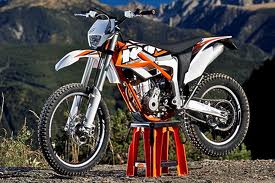
There was quite a buzz around the all-electric KTM Freeride trail bike launched at the recent EICMA show. I'm sure, given the high level of resolution displayed in most KTM products (and given KTM's long heritage in off-road motorcycling) that the Freeride will enter the market as the best thought-out and put-together entry in the nascent EV-dirtbike category. That said, in pursuit of light weight they've admitted that battery life could be as short as 20 minutes, under an expert rider. This puts the Freeride into the 'backyard use' category. There's not enough battery life to ride even a few miles to your off-road rec area, nor is there enough battery life to justify transporting the bike any distance.


By contrast, the 300cc ICE-powered Freeride will, I think, turn out to be a gangbusting success; I bet it will offer far superior off-road capability than competing bikes like the Yamaha 250, and it will really be that machine you can ride to the trails and back. It will be five or ten years before improvements in battery energy density give us a 200-pound motorcycle with that kind of range, so ICE it is. But surely taking the pickup truck out of the equation not only makes this a far more affordable solution, but a greener one, too?

EICMA's thunder (or should I write 'lightning'?) was stolen on the EV side though, by the release of pics of a Honda electric sport bike, the RC-E which will be unveiled to the public at the Tokyo show.


Wow, eh?

Months back, my friend James Parker, who designed the latest iteration of the Mission electric sport bike, told me that soon, a major OEM was going to enter the electric sphere, and when they did, it would be with amachine that no upstart company could compete with.

That was in a conversation in which I suggested that Mission really had backed away from its initial strategy to actually become a motorcycle manufacturer. At the time we talked, Mission had already done some work on a Honda-backed R&D project involving a hybrid race car. I interpreted James' comment as meaning that in his opinion, small companies like Mission, Brammo, or MotoCzysz were about to be steamrolled by Honda.

I wondered, "Does James know, or has he seen, a Honda project involving some of Mission's technology?" I didn't ask him, because I knew that if he had seen it, he'd have been sworn to secrecy, and I didn't want to put him on the spot. Anyway, we'll presumably learn more at the Tokyo show, about how close the RC-E is to turning a wheel.

Which brings me to my last point...

Another thing you read here first was that there would be no TT Zero race in 2012. Well, that was wrong. My friend Steve Hodgson recently cited (on his Facebook page) a Manx Radio report that there will be a race for EV bikes at the 2012 TT.

In my limited defense, I wrote that there would not be another TT Zero race unless and/or until a major OEM showed interest. Now, I wonder if Honda looked at last year's disappointing results and realized it has a chance to introduce the RC-E with a historic first, by lapping the TT course at over 100 miles an hour. Amateur Honda historians, like me, will already have noted that the 'RC' nomenclature assigned to this bike is what Honda gives to a 'homologation' bike -- a bike built for racing purposes, and then minimally adapted for road use.

Is this the first zero-emissions vehicle to lap the TT course at over 100 miles an hour? Uh-huh.

Friday, November 11, 2011

Wrapping up #MakeNoiseForMarcoSunday

Well, it's Friday and a work week's come and gone since #MakeNoiseForMarcoSunday. That's not very long, but it is already quite a bit longer than the amount of time it took motorcyclists all over the world to conceive of a global event, carry it out, and move on.

Almost ten thousand people read the post in which I originally suggested that not just MotoGP riders but all of us should rev our bikes as a way of both commemorating Marco Simoncelli and drawing our community together. That was, by a wide margin, the most-read post ever on Backmarker.

I originally posted that suggestion last Tuesday. Overnight, someone re-tweeting a link to that post created our Twitter hashtag, and late last week we got some support from motorcycle media (including the Cycle World and Ultimate Motorcycling web sites, Motorcycle-USA.com, and even some mainstream media (The Daily Mail newspaper in the U.K.)

The #MakeNoiseForMarcoSunday Facebook page drew nearly 1000 members in just a few days, and now dozens of people have uploaded videos of themselves, alone and in groups, revving their bikes. #MakeNoiseForMarcoSunday -- a search term that didn't exist at all on Google until last week, now brings up many pages of links related to the event.

In the end, it didn't matter that the MotoGP riders just stood by their bikes and watched fireworks. What was important was that ordinary motorcyclists all over the world had a way of showing their own solidarity with a fallen comrade.

So here's one more Note from the Dept. of Modest Suggestions: let's make 10:30 in the morning on the first Sunday in November the official day of mourning for fallen motorcyclists. It's well timed for it. It's the end of most racing seasons, the date's about half-way between the Day of the Dead and Rembrance Day (in the Commonwealth) or Veteran's Day (here in the U.S.) In much of the Northern Hemisphere, it's about the time bikes are put up for the winter.

Sure whenever May 20 rolls around, someone writes an essay about the crash that killed Jarno Saarinen and Renzo Pasolini in one fell swoop; we remember Joey Dunlop on the anniversary of his death; those guys will never be forgotten. But as a group, we tend to acknowledge the deaths of other riders but briefly and then move on, usually after concocting some story about how that can't happen to us.

But I'll keep saying this: While we don't ride or race motorcycles in order to take risks, risk gives the decision to ride or race meaning. If it was completely safe, or even pretty safe, it would be a completely different sport.

When I was a club racer, I was at some social function where someone introduced me to a stranger by saying, "This is my friend Mark. He's a motorcycle racer."

The guy shook my hand and said, "So you're a motorcycle racer. Golf's my game."

I smiled and said, "That's nice."

But what I thought was, "You idiot; do you really think those two things can be equated? Imagine the most intense pressure situation in all of golf. What would that be? A playoff hole at the Masters, and you can hole a 6 foot putt for the win? A putt you should make, right? But just long enough that you might not. You'd get some pretty bad butterflies alright. And you know what? If you missed it, you might -- for a moment -- wish you were dead. But you wouldn't ever actually be dead. As a motorcycle racer, you live with the realization that cost of any error in judgement can be catastrophic."

So yes, risk gives our sport meaning. That's why most people don't do it; why no matter how many people ever watch MotoGP, motorcycle racing will never be a mass-participation pastime. And why despite the fact that the risks are obvious, every now and then, we have to be reminded that even with continuous improvements in track safety and gear, and all the precautions we take to avoid tragedy, tragedy lurks around every corner. If it didn't; if the sport of motorcycle racing could ever be made completely safe, it would just be another game.

So when a Simoncelli dies out there on the track, his death gives your sport a depth that a mere game will never have.

Shakespeare (as usual) totally got the idea that risk imparts meaning to reward. He makes a great case for this idea in Henry V's epic "Crispen's Day" speech.

We would not die in that man's company
That fears his fellowship to die with us.
This day is call'd the feast of Crispian.
He that outlives this day, and comes safe home,
Will stand a tip-toe when this day is nam'd,
And rouse him at the name of Crispian.
He that shall live this day, and see old age,
Will yearly on the vigil feast his neighbours,
And say 'To-morrow is Saint Crispian.'
Then will he strip his sleeve and show his scars,
And say 'These wounds I had on Crispian's day.'


The strangest thing happened as I finished up this post. I thought I'd look up the day of St. Crispian's feast. It's October 25. Marco Simoncelli died on the 23rd -- the closest race day to Saint Crispian's.

All for now, MG